
How Your Baby Grows During the 1st Trimester
What Happens During 1st Trimester Fetal Development
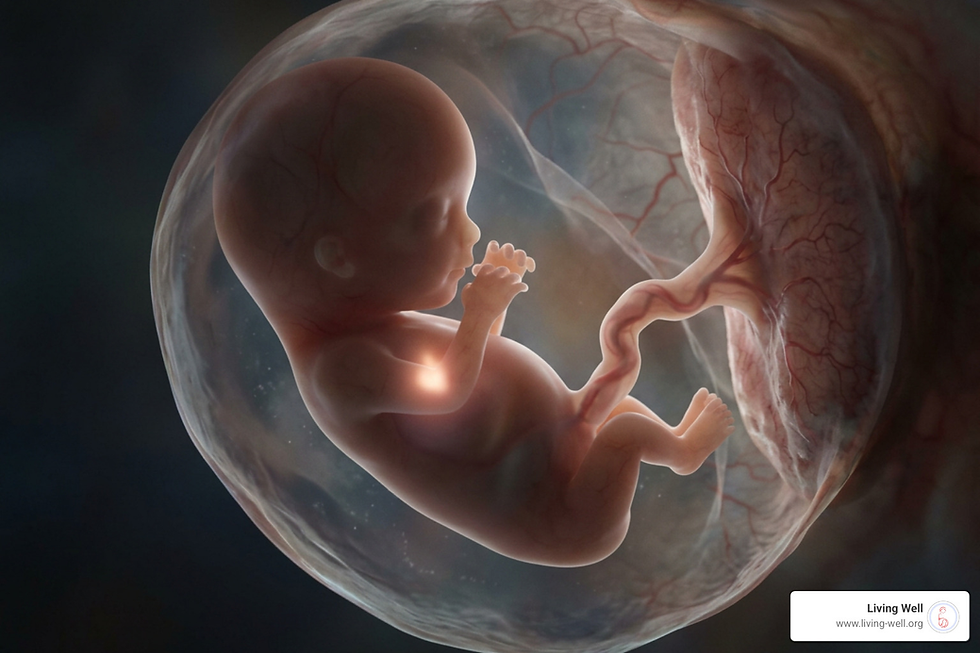
1st trimester fetal development is one of the most remarkable biological processes in human life — in just 12 weeks, a single fertilized cell grows into a fully formed baby with a beating heart, developing organs, fingers, and toes.
Here's a quick overview of what happens:
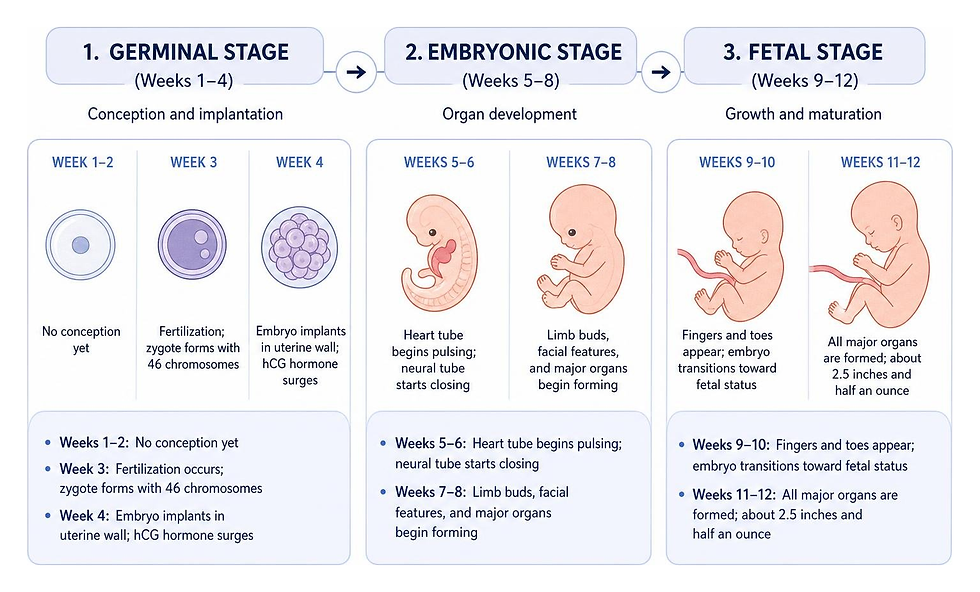
Weeks 1–2: No conception yet — gestational age is counted from the first day of your last menstrual period (LMP)
Week 3: Fertilization occurs; a zygote forms with 46 chromosomes
Week 4: The embryo implants in the uterine wall; hCG hormone surges
Weeks 5–6: The heart tube begins pulsing; the neural tube starts closing
Week 7–8: Limb buds, facial features, and major organs begin forming
Weeks 9–10: Fingers and toes appear; the embryo transitions toward fetal status
Weeks 11–12: All major organs are formed; the baby measures about 2.5 inches and weighs roughly half an ounce
The first trimester is considered the most critical window of pregnancy — almost all major organs and body systems form during this period.
By the end of week 12, your baby's bones, muscles, and organs have all taken shape. The risk of miscarriage also drops significantly after this point.
I'm Leo Kim, Executive Director of LivingWell Pregnancy Centers, where since 1985 we've supported over 170,000 women through the earliest and most uncertain stages of pregnancy — including helping them understand 1st trimester fetal development through free ultrasounds and compassionate medical care. Whether you've just found out you're pregnant or you're still figuring things out, knowing what's happening inside your body is a powerful first step.

The Three Biological Stages of 1st Trimester Fetal Development
When scientists and healthcare professionals look at the early journey of life, they divide early pregnancy into three clear biological phases: the germinal stage, the embryonic stage, and the fetal stage.
Understanding these stages starts with understanding how medical teams calculate your due date. In obstetrics, we track gestational age rather than post-conception age. Gestational age begins on the very first day of your last menstrual period (LMP), which means during weeks 1 and 2, your body is getting ready for ovulation, but fertilization hasn't actually happened yet. To convert post-ovulation embryonic age into clinical gestational age, doctors add two weeks. You can explore more about these early milestones in the NCBI Embryology research database or read our guide on understanding early pregnancy timelines.
Germinal Stage: Conception and Implantation (Weeks 1–4)
The germinal stage starts the moment fertilization takes place—usually within hours of ovulation inside the fallopian tube. Out of millions of sperm deposited, only about 1% navigate into the uterus, and a single sperm unites with the egg. This creates a single-celled zygote carrying a complete set of 46 chromosomes (23 from each biological parent).
Over the next few days, this cell rapidly divides through mitotic cleavage:
Day 3–4: It forms a solid cluster of cells called a morula, which looks remarkably like a tiny raspberry.
Day 5: The cell cluster hollows out and expands into a blastocyst made up of 50 to 150 cells.
Weeks 3–4 (Gestational Age): The blastocyst travels down into the uterus and burrows directly into the rich uterine lining (implantation). This triggers specialized trophoblast cells to begin releasing human chorionic gonadotropin (hCG)—the exact hormone detected on home pregnancy tests.
Embryonic Stage: Rapid Organ Formation (Weeks 5–8)
Beginning at week 5, the developing conceptus is called an embryo. This begins organogenesis—the intense period where every structural organ system comes into existence. The embryo organizes itself into three foundational germ cell layers:
Ectoderm: Gives rise to the nervous system, brain, skin, hair, and nails.
Mesoderm: Formulates the heart, circulatory system, skeletal bones, muscles, and kidneys.
Endoderm: Builds the internal linings of the lungs, gastrointestinal tract, liver, and pancreas.
Because all major body framework structures form rapidly during this stage, weeks 5 through 8 represent the single most sensitive critical development window of human growth.
Fetal Stage: Growth and Refinement (Weeks 9–12)
By the start of week 9 (or week 8 post-conception), the structural groundwork is complete. The developing human transitions from an embryo to a fetus (a Latin word meaning "offspring"). Over 90% of the more than 4,500 named structures found in an adult human body are already present. The remaining weeks of the first trimester are spent maturing these tissues, refining intricate anatomical features like eyelids and fingernails, and building physical strength.
Week-by-Week Growth and Milestones in the First Trimester
Watching how quickly a baby develops inside the womb is astounding. To help bring these microscopic changes to life, doctors often measure growth using Crown-Rump Length (CRL)—the distance from the top of the head (crown) to the bottom of the buttocks (rump)—as well as overall body weight.
For a full breakdown of weekly physical progression, review the Mayo Clinic first trimester guide or read our detailed article on fetal development from conception to fully formed.

Weeks 1 to 4: Fertilization and the Foundations of 1st Trimester Fetal Development
During the first two weeks, your body prepares its uterine lining. Ovulation occurs near the end of week 2.
Week 3: Fertilization occurs in the fallopian tube, creating a zygote that travels toward the uterus.
Week 4: Implantation takes place. The embryo is minuscule—about 1/100th of an inch to 2 millimeters long (roughly the size of a tiny poppy seed). Despite its tiny size, cell differentiation is in full swing, establishing the primitive streak and forming the fluid-filled amniotic sac that protects the embryo.
Weeks 5 to 8: Neural Tube Closure and Early Organs
Week 5: A primitive cardiac tube forms and begins pulsing at roughly 110 beats per minute. The embryo resembles a tiny C-shaped curve with a tadpole-like tail.
Week 6: The neural tube—which becomes the brain and spinal cord—closes completely. Paddle-shaped arm and leg buds emerge.
Week 7: The head grows rapidly to accommodate brain development, and tiny indentations mark where the eyes and ears will sit.
Week 8: Facial features take shape, including the tip of the nose and upper lip. The embryo reaches about 0.5 inches in length (11 to 14 mm)—about the size of a black bean—and the tail recedes.
Because neural tube closure occurs by week 6, getting adequate folic acid is crucial. If you're wondering whether early symptoms might mean you're pregnant, check out our guide on recognizing early signs of pregnancy before a test.

Weeks 9 to 12: Transitioning to Fetal Status and 1st Trimester Fetal Development Milestones
Week 9: Fingers and toes lose their early webbed appearance. Elbows can bend, and tiny eyelids form over the eyes.
Week 10: The head rounds out and accounts for roughly half of the fetus's total size. External ears take shape, and fingers and toes separate completely.
Week 11: The fetus is officially designated as a fetus in medical care. Tooth buds form under the gums, and the liver begins producing red blood cells.
Week 12: Fingernails develop, facial profiles become distinct, and the kidney system starts secreting urine into the amniotic fluid. The fetus weighs about 0.5 to 1.5 ounces and measures 2.5 to 3.5 inches long from crown to rump—roughly the size of a plum.
Milestone Feature | Embryonic Period (Weeks 5–8) | Fetal Period (Weeks 9–12) |
Scientific Designation | Embryo | Fetus |
Average Size (CRL) | 2 mm to 14 mm (poppy seed to bean) | 16 mm to 61 mm (grape to plum) |
Heart Development | Pulsing heart tube loops & forms chambers | Heart fully formed with 4 distinct chambers |
Limb Anatomy | Paddle-like limb buds form | Unwebbed fingers, toes, and bendable elbows |
Major Organ Systems | Organogenesis (organs actively forming) | System refinement & organ functional onset |
Essential Support Systems and Fetal Heartbeat Milestones
An embryo cannot grow without a complex life-support infrastructure. During the first trimester, three vital structures form inside the uterus to nourish, protect, and sustain your developing baby.

Roles of the Placenta, Amniotic Sac, and Umbilical Cord
The Amniotic Sac: A tough, fluid-filled membrane that cushions the baby against physical pressure, maintains a stable thermal environment, and allows the embryo to move freely.
The Placenta: Formed from outer trophoblast cells and uterine tissues, the placenta attaches to the uterine wall. It produces vital hormones like progesterone and human placental lactogen while filtering nutrients and oxygen from your blood.
The Umbilical Cord: Connecting the fetus to the placenta, this cord contains blood vessels that transport oxygen-rich blood and nutrients directly to the baby while carrying away cellular metabolic waste.
Detecting the Heartbeat and Fetal Movement
The cardiovascular system is the very first functional organ system in the body.
Week 5: A single tube-like primitive heart begins rhythmically contracting at roughly 110 beats per minute.
Weeks 6–7: Cardiac looping converts the single tube into a four-chambered organ. An early transvaginal ultrasound can visually detect this rapid fluttering motion inside the gestational sac.
Weeks 10–12: The fetal heartbeat can typically be picked up electronically using a Doppler audio wand during a routine prenatal appointment.
Though muscle fibers begin microscopic twitching around week 8, these movements are too faint for a mother to feel. True maternal sensation of movement ("quickening") typically occurs later, between weeks 16 and 22.
To learn more about what to expect during early scans, explore our ultrasound heartbeat guide and read why early ultrasounds are so important.
Maternal Body Changes and Early Pregnancy Care
While your baby undergoes rapid 1st trimester fetal development, your body experiences sweeping physical and chemical shifts driven by surging levels of hCG, progesterone, and estrogen.

Navigating First Trimester Symptoms and Physical Changes
Rapid hormonal shifts touch almost every system in your body:
Morning Sickness: High hCG levels and altered digestion often cause nausea or vomiting, which can happen at any time of day.
Breast Tenderness & Montgomery's Tubercles: Hormones prepare your body for future lactation, causing breast tissue to swell and small, bump-like glands (Montgomery's tubercles) to appear on the areolas.
Fatigue: Progesterone acts as a natural sedative while your body builds the placenta, leading to noticeable tiredness.
Frequent Urination & Uterine Pressure: Your expanding uterus rests directly against your bladder, creating an early urge to urinate often.
Increased Blood Volume: Blood volume expands by up to 40% to 50% across pregnancy, raising your baseline resting heart rate.
For a deeper look into what your body is experiencing, check out our guide to first trimester body changes, read up on first-trimester embryology ultrasound care, or review our advice on navigating symptoms after a positive pregnancy test.
Recommended Screening Tests and Prenatal Care
Early, consistent prenatal care helps protect both mother and baby. Standard first-trimester evaluations include:
First Comprehensive Prenatal Exam: A thorough physical exam, personal medical history review, and baseline vitals assessment.
Blood Panels & Typing: Testing blood type, Rh factor incompatibility, hemoglobin levels, and immunity against infectious conditions.
Early Verification & Dating Scan: An ultrasound evaluation used to confirm an intra-uterine pregnancy, establish an accurate due date via crown-rump length, and verify cardiac activity.
Once you reach the end of week 12, the risk of miscarriage drops significantly. If you need confirmation, you can schedule a free pregnancy verification scan at LivingWell.
Frequently Asked Questions About First Trimester Fetal Development
When does an embryo officially become a fetus?
The medical terminology shifts from embryo to fetus at the start of week 9 of pregnancy (which equals 8 weeks after conception). At this point, all major internal organs and external body structures are established, shifting the focus from initial formation to growth and maturation.
Why is folic acid so important during the first trimester?
Folic acid (vitamin B9) is essential for proper cell division and neural tube closure, which occurs within 28 days of conception—often before a woman even knows she is pregnant. Taking 400 to 800 mcg of folic acid daily dramatically reduces the risk of serious neural tube defects like spina bifida and anencephaly.
When can you first hear or see the baby's heartbeat?
A heart flickering motion can often be seen visually on a transvaginal ultrasound around 6 to 7 weeks of pregnancy. Listening to the fetal heartbeat audibly via an electronic Doppler wand usually occurs around weeks 10 to 12 during a routine medical checkup.
Early Pregnancy Care and Next Steps
Navigating early pregnancy can feel overwhelming, especially if you're facing an unexpected situation. Understanding how your baby is growing day by day brings clarity and confidence during an uncertain time.
At LivingWell, we believe every woman deserves clear medical facts, warm emotional support, and professional care in a non-judgmental environment. Since 1985, our licensed doctors, registered nurses, and certified ultrasound technicians have provided free, confidential medical services to women across our community.
We offer:
Free Medical-Grade Pregnancy Testing: Fast, accurate lab-quality testing to confirm your result.
Free Pregnancy Verification Ultrasounds: Performed by licensed medical staff to confirm intra-uterine pregnancy, assess gestational age, and detect a heartbeat.
Confidential Options Counseling & Support: Objective, pressure-free information so you can make fully informed decisions for your health and future.
If you suspect you might be pregnant or need answers about your early pregnancy, you don't have to navigate it alone. You can find out more by visiting our LivingWell free pregnancy support and services page.
LivingWell Pregnancy Center2010 N Tustin St, Suite C, Orange, CA 92865View Location on Google Maps
Reach out to our team today to schedule your free, confidential appointment—we are here to support you every step of the way.


Comments