
First Trimester Survival Guide: Early Pregnancy Symptoms
Surviving the First Trimester: Managing Common Early Pregnancy Symptoms

Navigating the early weeks of pregnancy can feel like stepping onto an emotional and physical rollercoaster. While you might not have an obvious baby bump yet, your internal systems are working around the clock. Rapid hormonal shifts—especially surges in human chorionic gonadotropin (hCG), estrogen, and progesterone—drive noticeable physical adaptations. Understanding these changes helps you care for your body with patience and confidence as you experience an invisible miraculous transformation.
Many women encounter a predictable cluster of early physical indicators:
Nausea and Food Aversions: Often termed "morning sickness," nausea can occur at any hour of the day. It is closely linked to fluctuating hCG levels and heightened olfactory sensitivity.
Profound Fatigue: Your body is building a placenta and supporting a major expansion in blood volume, leaving you feeling exhausted even after a full night's rest.
Breast Tenderness and Swelling: Hormones stimulate milk gland development and increase blood flow to breast tissue, making chest areas sensitive to touch.
Frequent Urination: Increased renal blood flow prompts your kidneys to produce extra fluid, while an enlarging uterus places physical pressure on your bladder.
Digestive Slowdowns: Elevated progesterone relaxes smooth muscle tissue throughout your digestive tract, often causing bloating and constipation.
Understanding Your First Trimester Timeline and Body Changes
Learning how long the first trimester lasts provides helpful perspective on what your body accomplishes. Spanning from gestational week 1 through the end of week 13, this phase establishes every fundamental organ system for the growing embryo while remodeling maternal physiology.
During weeks 1 and 2, your body prepares for ovulation and conception. Week 3 marks fertilization in the fallopian tube, followed by blastocyst implantation into the uterine wall around week 4. Many women first start wondering about early changes and checking signs of pregnancy before taking a test around the time of their missed menstrual period.
As pregnancy progresses through weeks 5 to 13, systemic adaptations accelerate:
Hormonal Surges: The body produces more estrogen during a single pregnancy than during an entire non-pregnant lifetime, while progesterone levels rise steadily to maintain the uterine lining.
Circulatory Adjustments: Maternal blood volume begins expanding, and maternal cardiac output increases significantly to support placental perfusion.
Uterine Growth: The uterus transitions from the size of a small plum to that of a grapefruit by week 12, shifting upward within the pelvis.
Metabolic Shifts: Basal metabolic rates adjust to prioritize glucose and nutrient delivery across the developing placenta.
Daily Coping Strategies and Early Pregnancy Wellness
Managing early symptoms involves small, practical daily choices that support your comfort and nutritional needs. Recognizing common symptoms after a positive pregnancy test helps you tailor an effective self-care routine:
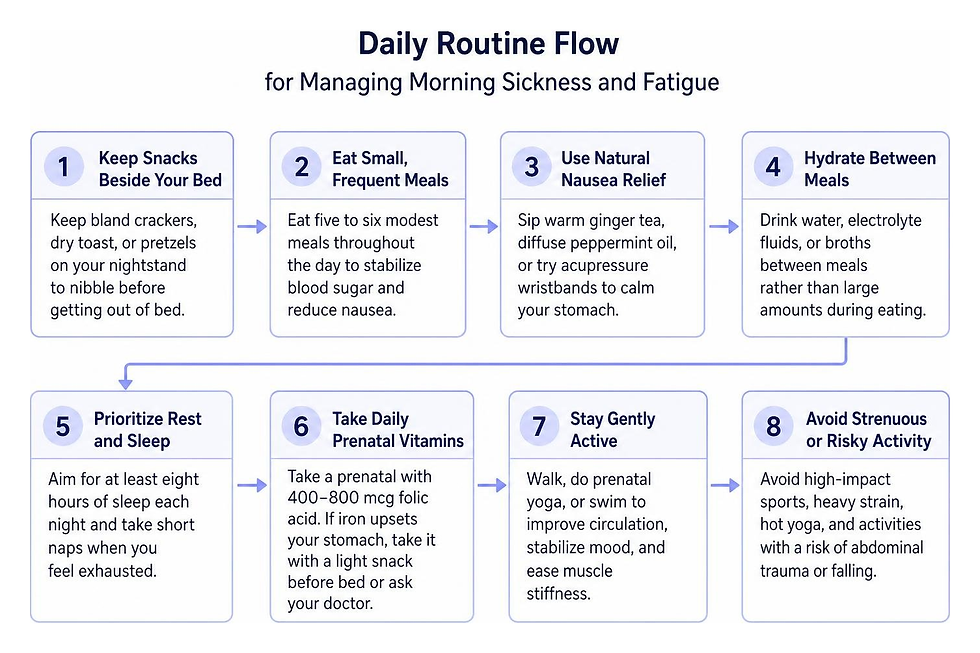
Keep Snacks Beside Your Bed: Keep bland crackers, dry toast, or pretzels on your nightstand to nibble before getting out of bed, preventing an empty stomach from triggering nausea.
Eat Small, Frequent Meals: Consuming five to six modest meals throughout the day stabilizes blood glucose levels and reduces gastric irritation and heartburn.
Incorporate Natural Nausea Relief: Sip warm ginger tea, diffuse soothing peppermint oil, or try acupressure wristbands to calm an upset digestive system.
Hydrate Between Meals: Drink plenty of water, electrolyte-enhanced fluids, or broths between meals rather than large volumes during eating, which helps prevent abdominal fullness.
Prioritize Rest and Sleep Hygiene: Aim for at least eight hours of sleep per night and take brief restorative naps during the day when fatigue peaks.
Start Daily Prenatal Vitamins: Take a quality prenatal supplement containing at least 400 to 800 micrograms of folic acid to support neural tube development. If iron worsens morning nausea, take your vitamin with a light snack before bedtime or speak with your doctor.
Maintain Gentle Physical Activity: Incorporating safe exercises during early pregnancy—such as brisk walking, prenatal yoga, or low-impact swimming—improves circulation, stabilizes mood, and eases muscle stiffness.
Avoid Strenuous or Risky Movements: Review specific exercises to avoid during the first trimester, steering clear of high-impact sports, heavy strain, hot yoga, or activities with a risk of abdominal trauma or falling.
Pregnancy Confirmation and Ultrasound Milestones
A positive home pregnancy test is an exciting first indicator, but clinical confirmation is the next essential step in your healthcare journey. If you are asking yourself, "my at-home pregnancy test is positive, now what?", scheduling a medical-grade pregnancy test and an early ultrasound will provide clear answers.
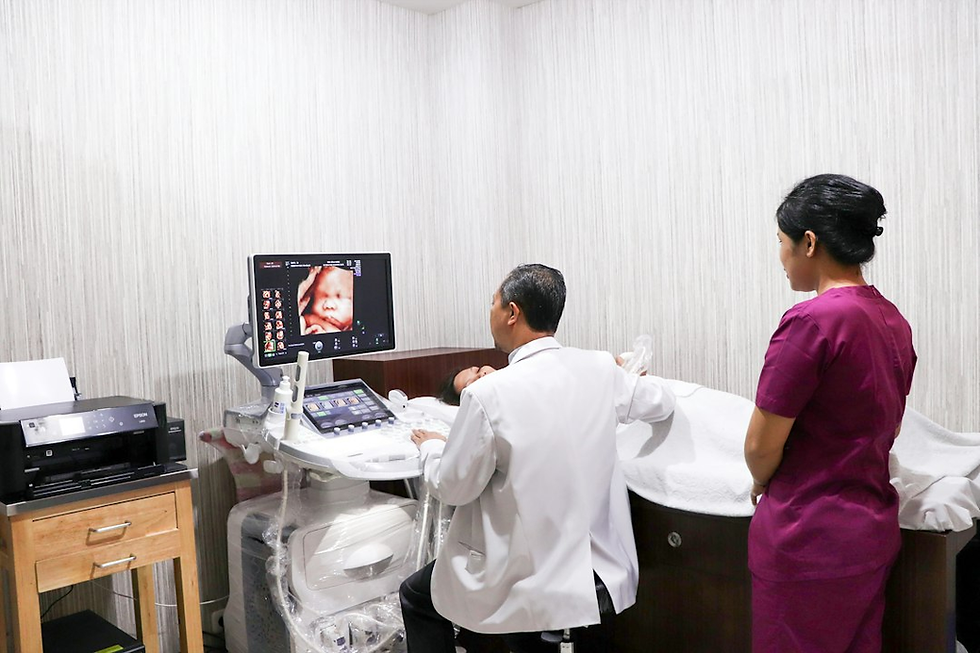
During an initial clinical appointment, healthcare providers establish a medical baseline by:
Reviewing personal, obstetric, and family medical histories.
Checking vital signs, including baseline blood pressure and weight.
Ordering prenatal blood panels (blood typing, Rh factor, complete blood count, and infectious disease screenings).
Performing a urinalysis to check for protein, glucose, and asymptomatic bacteriuria.
Providing a forum to discuss symptoms, nutritional guidance, medication safety, and screening preferences.
Essential Ultrasound Milestones and Dating in the First Trimester
Ultrasound imaging is the gold standard for verifying pregnancy location, establishing accurate dating, and evaluating viability (Lee et al., 2025). In early gestation, transvaginal ultrasonography offers superior resolution compared to transabdominal scanning because the transducer sits closer to the pelvic organs. Both modalities are safe, non-invasive, and do not use ionizing radiation.
Clinical sonographers monitor distinct developmental markers week by week:
Gestational Sac (Weeks 4–5): The first definitive sonographic sign of an intrauterine pregnancy is a circular, fluid-filled structure measuring 2 to 3 mm, bordered by an echogenic rim (the double decidual sign).
Yolk Sac (Weeks 5–6): Visualized within the gestational sac, the yolk sac provides critical nourishment to the early embryo before the placenta is fully established.
Fetal Pole and Cardiac Activity (Weeks 6–7): The embryo (fetal pole) becomes visible along the edge of the yolk sac. Rhythmic embryonic cardiac motion can typically be detected when the fetal pole reaches 2 to 4 mm in length.
Crown-Rump Length (Weeks 7–13): Measuring the embryo from the top of the head (crown) to the bottom of the buttocks (rump) provides the most accurate method for determining gestational age and estimating your due date.
Understanding these milestones aligns with the broader timeline of first trimester fetal development:
Gestational Week | Primary Sonographic Landmark | Normal Measurements / Clinical Thresholds | Primary Clinical Purpose |
Weeks 4–5 | Gestational Sac | 2–5 mm Mean Sac Diameter (MSD) | Confirms intrauterine location |
Weeks 5–6 | Yolk Sac | 3–5 mm diameter (<7 mm) | Confirms true gestational structure |
Weeks 6–7 | Fetal Pole & Cardiac Activity | Embryo visible; cardiac flicker present | Confirms embryonic viability |
Weeks 8–10 | Limb buds & early movement | Crown-Rump Length (CRL) progressive growth | Establishes accurate gestational age |
Weeks 11–13 | Physiological organ anatomy | CRL 45–84 mm; Nuchal translucency region | Detailed anatomical assessment & dating |
Confirming Viability and Investigating Pregnancy Loss
Early ultrasound exams also help clinicians evaluate whether a pregnancy is progressing normally or showing signs of early pregnancy failure (Lee et al., 2025). Tracking fetal development during the first trimester allows medical providers to distinguish between an early viable pregnancy and early loss.
Definitive diagnostic criteria for early pregnancy loss include:
Anembryonic Gestation (Blighted Ovum): A Mean Sac Diameter (MSD) measuring 25 mm or greater without a visible embryo.
Absence of Cardiac Motion: An embryo with a Crown-Rump Length (CRL) of 7 mm or greater that lacks detectable cardiac pulsations.
Abnormal Yolk Sac Morphology: A yolk sac exceeding 7 mm in diameter or demonstrating irregular, collapsed borders, which is frequently associated with poor developmental outcomes.
Lack of Expected Growth: Absence of an embryo with a heartbeat 11 to 14 days after an initial scan demonstrated a gestational sac without a yolk sac.
When initial ultrasound findings are indeterminate, providers recommend a follow-up scan in 7 to 14 days along with serial quantitative serum hCG tests to ensure accurate diagnosis.
Early Complications, Red Flags, and When to Seek Immediate Care
While mild cramping and light spotting can occur as the uterus adapts, certain symptoms warrant prompt evaluation to rule out serious conditions:
Vaginal Bleeding and Subchorionic Hematoma: Approximately 25% of women experience some degree of light bleeding or spotting during early pregnancy. A frequent cause is a subchorionic hematoma—a collection of blood between the uterine wall and the gestational membranes. While many resolve on their own, all bleeding should be evaluated by a healthcare provider.
Ectopic Pregnancy: An ectopic pregnancy occurs when a fertilized egg implants outside the uterine cavity, most commonly within a fallopian tube. Ectopic pregnancies account for approximately 6% of all pregnancy-related maternal deaths. Warning signs include sharp, one-sided lower abdominal or pelvic pain, referred shoulder tip pain, vaginal bleeding, and dizziness or syncope. This is a medical emergency requiring immediate attention.
Molar Pregnancy (Gestational Trophoblastic Disease): A rare condition characterized by abnormal placental tissue growth, often appearing on an ultrasound with a classic "snowstorm" pattern and accompanied by extremely high hCG levels, rapid uterine enlargement, and severe nausea.
Hyperemesis Gravidarum: An extreme form of pregnancy-related nausea and vomiting resulting in dehydration, electrolyte imbalances, weight loss greater than 5% of pre-pregnancy weight, and ketonuria, often requiring medical antiemetic therapy or intravenous hydration.
Frequently Asked Questions About Early Pregnancy
When does the baby develop a heartbeat during early pregnancy?
Embryonic cardiac activity begins early in development, with rhythmic cell contractions starting around gestational week 5 to 6. On a sensitive transvaginal ultrasound, a visible cardiac flicker is typically detectable between 6.0 and 7.0 weeks of gestation, when the fetal pole measures at least 2 to 4 mm in length.
Is spotting or light bleeding normal in the early weeks?
Light spotting occurs in roughly one out of four early pregnancies and can stem from benign causes, such as blastocyst implantation, minor cervical irritation following intercourse or a pelvic exam, or a small subchorionic bleed. However, because bleeding can also indicate a miscarriage or an ectopic pregnancy, you should always report any vaginal bleeding to your healthcare provider for clinical evaluation.
What should I do right after taking a positive home pregnancy test?
After seeing a positive result, schedule a medical confirmation appointment and begin taking a daily prenatal vitamin containing folic acid. If you feel overwhelmed, uncertain, or need help with an unplanned pregnancy, reaching out to a supportive clinic will connect you with accurate information, licensed clinical care, and a safe environment to explore all your options.
Compassionate Support and Next Steps
Facing the physical, emotional, and practical realities of early pregnancy is easier when you have a dedicated support team by your side. Whether you planned your pregnancy or were caught by surprise, having clear facts, personalized guidance, and professional medical care makes all the difference.
LivingWell provides no-cost, confidential, and professional reproductive health services. Since 1985, our licensed medical doctors, registered nurses, and certified sonographers have offered compassionate care to women across our community, serving over 1,420 local women in 2025 alone.
We invite you to visit our center for lab-quality pregnancy testing, medical-grade confirmation, non-diagnostic ultrasound imaging, and comprehensive consultations. LivingWell is located at 2010 N Tustin St, Suite C, Orange, CA 92865.
To explore your health choices, verify your pregnancy, and discuss your next steps in a caring, pressure-free setting, schedule an appointment for no-cost ultrasound and pregnancy services with our team today.
References
William A. Lee, Grant Nelson, Vidya Lala, Scott P. Grogan. "First-Trimester Ultrasonography." StatPearls Publishing, 2025. NBK573070.
For more information on early pregnancy symptoms and management, visit the American College of Obstetricians and Gynecologists.


Comments